The Adventures Of Emery Jones: A New Must Have Black Children’s Book

emery jones black mothering yardyspice

I am always on the look out for books with black children as the main characters because I think it’s important for children to be able to imagine themselves as a character in the book they are reading. According to the research, not only do children find it empowering but it also makes them motivated to when their books include experiences or images with which they are familiar. More here…..

What do rain gutters and spice racks have to do with reading?

Credit: Yummymummyclub.ca I work hard to create a print rich environment for Biker Boy because, well, I love to read and I want to pass it on to him. It also helps that the research shows that access to books has a positive effect on children’s motivation to read but sometimes there can be too much of a good thing. Thanks to the Grandmas and Amazon’s penny books we’ve accumulated a LOT of books. It had gotten to the point where it was becoming increasingly difficult to choose books for our bedtime stories because we had to rifle through stacks of books before deciding.

Pinterest to the rescue Continue reading

Four reasons black parents should home-school

homeschool why shouldn't black parents

Home-schooling used to be the domain of the very religious or counter-cultural types (read: white) but times are certainly changing. Not only is home-schooling now becoming mainstream as more parents realize that traditional schooling may not be a good fit for their children but home-schooling families are becoming more diverse. Despite the increase in the overall numbers, we are still a small fraction of home-schooling families. I’m a part of home-schooling groups both online and in the community and invariably, I am either the only black mom or one of two. I find it a bit disheartening because the research shows that black children benefit a lot from being home-schooled. Continue reading

Freebie Friday: Hour Of Code

Hour of code

It’s another Freebie Friday and I’ve heard about yet another free computer coding event. Next week,
December 9 thru 15, is Computer Science Education Week (CSEdWeek) and a coalition of organizations – Computing in the Core, Code.org, and CSEdWeek – have come together to democratize computer programming. Throughout the week, people from age 6 – 106 can learn basic computer programming either online at CSEdWeek or at various free events in your community.

No excuses. You don’t even need a computer!

Do we need computers for every participant?
NO COMPUTERS NEEDED! We will curate a selection of Computer Science tutorials that work on PC’s, smartphones, and tablets – so really you can join wherever you are with whatever you have.
If you have more than one device, research shows that students learn best when they are pair programming, sharing a computer. So encourage your students to double up. If using smartphones, they can take turns. If you have only one internet-connected device, then you can have an audience interactively shout out answers while you go through the tutorial on a shared screen using a projector. And if you don’t have any internet-connected devices, you can still participate. Computer Science is all about problem solving, logic, and design, so you can start with pencil and paper (like some of the best professional programmers) using “unplugged” tutorials (see example “unplugged” tutorials: by NCWIT or by ThinkerSmith).

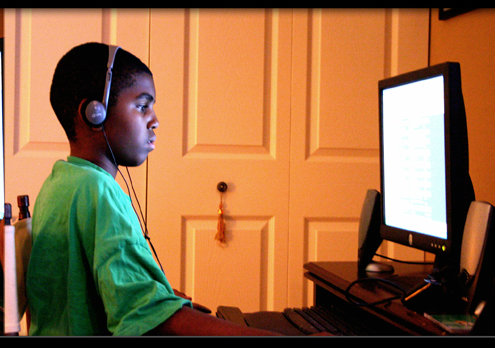
I am big proponent of our kids learning computer science because coding will be the language of the future and the field is in desperate need of diversity. So sign your kids up for one of the free events and get them started.

Yale Study: Fast Food Companies Target Black Children

fast food companies targeting black children
Credit: Joyosity

Our children are almost fifty percent more likely to be obese than non-black children. The Children’s Defense Fund cites two possible causes — physical environment and lifestyle. The physical environment of black children tends to preclude an active lifestyle, which reduces the likelihood of obesity. The biggest contributor to obesity, for both children and adults, is a lifestyle little exercise and poor food choices. One major component of poor food choices is the consumption of convenience foods so it was a bit shocking to read that a Yale study found that fast food chains are deliberately target black children. According to the study, Fast Food FACTS 2013, which focused on the marketing of fast food to children:

  • African American children and teens see at least 50% more fast food ads than their white peers. McDonald’s and KFC, in particular, specifically target African American youth with TV advertising, targeted websites, and banner ads.
  • Less than 1% of kids’ meals combinations at restaurants meet nutrition standards recommended by experts, and just 3% meet the industry’s own Children’s Food and Beverage Advertising Initiative and Kids LiveWell nutrition standards;
  •  In 2012, McDonald’s was the only restaurant to maintain websites (including 365Black.com) targeting specific racial or ethnic minority groups.
  • McDonald’s spent 2.7 times as much to advertise its products as all fruit, vegetable, bottled water, and milk advertisers combined.

Fast food advertisers appeal to our instinctive need as parents to make our children happy. We have to be mindful, however, that whenever we see an advertisement, especially one for fast food, we are being manipulated into spending money on a psychological need that can be met in other ways. What’s more the product that we are being manipulated into buying will harm our children in the long run, the opposite of what we wanted to do in the first place.  The study recommended that fast food restaurants provide nutritious sides and drinks and stop exploiting our children’s vulnerability to advertising. When you consider, however, that fast food chains gross billions of dollars from selling junk food to our kids, I highly doubt that will be happening anytime soon.

Although fast food ads are everywhere, as parents, we have two major advantages: we control the money and access. Avoid buying fast food if at all possible and instead use frozen left-overs, quick salads, or other nutritious healthy “fast foods” . Limiting ads outside the home is hard but it is possible. First, we can limit our children’s media consumption and when we do allow them to watch television, we can choose ad-free options such as Netflix or dvds.  More than anything just remember that we control the purse strings so it is up to us, not whining, to decide what our children can eat.